

A World Ready for Change
This movement came to life during the eighteenth century, a period in which European societies were marked by extreme social inequalities, strong religious authority, and absolute monarchy. Political power was concentrated in the hands of a few, while the majority of the population had little influence over decisions that shaped their lives. In this context, the Enlightenment emerged as a movement that deeply transformed the way individuals understood the world and society, often seen as a turning point that reshaped political systems and influenced how people think even today. The Enlightenment was an intellectual movement that emphasized reason, science, and sought to improve society through observation, fact-based reasoning, and critical inquiry. Thinkers such as Francis Bacon, René Descartes, and John Locke played a key role in reinforcing these ideas. Gradually, the Enlightenment represented a decisive intellectual revolution that challenged traditional authority and laid the foundations of modern democratic societies.
Reason as a New Way of Understanding the World
First, the Enlightenment can be understood as a major intellectual revolution that changed humanity’s relationship to knowledge and truth. Enlightenment thinkers believed that reason should be the primary tool for understanding the world, rather than tradition, superstition, or blind faith. Science and rational thought were promoted as ways to explain natural and social phenomena. The spread of knowledge became central to this movement, particularly through books, salons, and major works such as The Encyclopédie, edited by Denis Diderot and Jean le Rond d’Alembert. This project aimed to gather and share human knowledge with a wide audience, reflecting the Enlightenment belief that education could lead to progress. As Immanuel Kant famously described the Enlightenment as humanity’s emergence from self-imposed ignorance, encouraging individuals to think for themselves. Overall, the Enlightenment strives to liberate individuals intellectually by giving them the tools to question and understand the world around them.
Questioning Power and Social Order
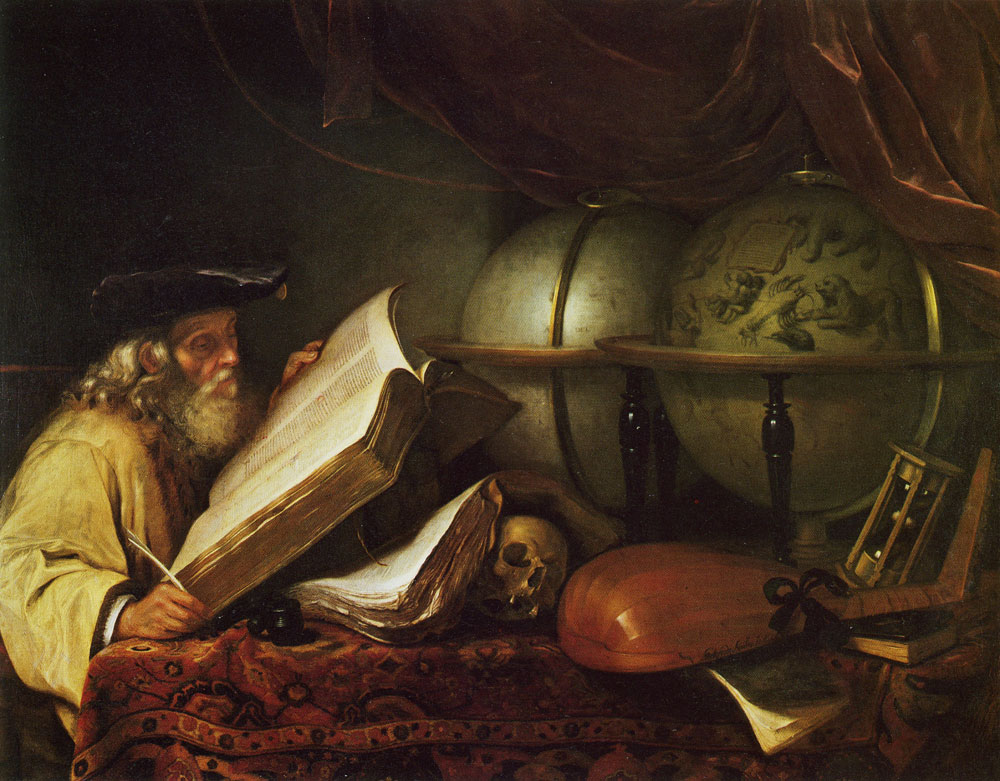
Furthermore, they strongly challenged the political and social order of the time. Absolute monarchy and the idea of divine right were increasingly criticized by philosophers who believed that power should not be unlimited or inherited without accountability. Thinkers such as Montesquieu argued for the separation of powers between the legislative, executive, and judicial branches in order to prevent tyranny. John Locke developed the idea of natural rights, including life, liberty, and property, which governments were meant to protect rather than violate. Social inequalities and privileges were also questioned, as Enlightenment philosophers promoted equality before the law. These ideas gradually weakened the legitimacy of the Ancien Régime in France and contributed to political unrest. The Enlightenment did not directly cause revolutions, but it deeply influenced revolutionary movements, especially the French Revolution. The Declaration of the Rights of Man and of the Citizen reflects Enlightenment principles such as liberty, equality, and popular sovereignty, showing how intellectual change prepared the ground for political transformation.
The literary world was heavily influenced by these ideas as well. In English literature, authors such as Daniel Defoe, Jonathan Swift, and Henry Fielding wrote about the social realities, placing the lower-class society characters at the center of their stories. Defoe’s Moll Flanders recounts adventures of a morally problematic heroine and was even banned for its lewd content. Henry Fielding’s Tom Jones comically represents the social scene of the time, openly criticizing upper-class values. These works signaled a broader shift in mindset, as literature moved toward a more realistic, critical examination of everyday life and social inequality.
An Enduring Legacy in the Modern World
Finally, the Enlightenment has left a lasting legacy that continues to shape the modern world. Many of today’s political and social systems are based on their ideals. Democracy, the rule of law, freedom of expression, and the protection of human rights all reflect the belief that individuals are rational beings capable of governing themselves. Education remains a key value, as knowledge is seen as essential for progress and citizenship. The emphasis on scientific reasoning and critical thinking continues to influence modern societies, particularly in debates surrounding politics, ethics, and technological development. Although the Enlightenment has also been criticized for its limits and contradictions, its core principles remain central to contemporary democratic societies. The modern world is therefore deeply rooted in the intellectual revolution initiated during the Enlightenment.
A Lasting Intellectual Turning Point
In conclusion, the Enlightenment was far more than a historical period; it was a profound intellectual transformation that reshaped society, politics, and human thought. By promoting reason, knowledge, and individual freedom, it challenged traditional authority and prepared the way for modern democratic systems. Its influence remains visible today, making the Enlightenment one of the most significant movements in the development of the modern world.
Featured image: Image: David von Becker/Deutsches Historisches Museum, available at Penn Today

- More than Sound: Listening to What Makes Us Human - January 23, 2026
- When Justice Stops Feeling Abstract - January 10, 2026
- How Chips Quietly Shape Power - January 3, 2026